Join Kit Colbert in a walkthrough oveview of the VMware vCenter Operations Manager, a component of the vCenter Operations Management Suite. These are the new Features of VMware vCenter Operations Management Suite Editions.
New Operations Management Dashboard provides comprehensive views into health, risk and efficiency scores of your cloud infrastructure. Quickly drill down to see what’s causing current workload conditions, pinpoint potential problems in the future and identify areas with inefficient use of resources.
New Correlation of Performance and Change Events inside the guest operating system enable administrators to quickly understand and remediate performance issues arising from configuration changes.
New Compliance Checking of vSphere Hosts allow administrators to maintain a compliant infrastructure and automated the hardening of vSphere hosts with pre-built security and compliance guidelines.
New Smart Alerts provide pro-active notifications of building health, performance and capacity issues in the environment. Automated root cause analysis identifies the offending metric across all layers of the infrastructure.
New Capacity Planning, Reporting and Optimization views help administrators optimize VM density; identify areas of reclaimable waste and chronic capacity shortfalls. Configurable alerts notify of changing capacity conditions in production and non-production areas.
New Integrated Cost Metering and Reporting capabilities provide visibility into the financial value of consumed resources and enable administrators to optimize provisioned capacity for lowest cost without sacrificing performance.
New Discovery and Visualization of Application and Infrastructure Dependencies bring application-level awareness to infrastructure and operations teams to ensure service levels and disaster recovery protection for all critical application services. Application components and version numbers are named automatically and updated continuously.
Tuesday, January 24. 2012
VMware vCenter Operations 5.0 - Introduction Video
Monday, January 23. 2012
What happens to resource pools when vCenter goes down?
A fellow VCI who was teaching the vSphere 5 What's New training course got a question from a student asking what happens to resource pools when vCenter goes down, because with vSphere 5.0 all the setting for resource pools are "moved" to vCenter.
Andy Cary who works as a Senior Technical Trainer at VMware responded immediately with: I created a RP on my vCenter and turned off expandable reservations for memory. Placed VM1 under said resource pool and failed to power up because the VM need to reserve memory for the overhead of running the VM (had no reservations set on the RP). So next I directly connected to the host and powered on the VM with no problem at all. However when you go back to the vCenter it displays:
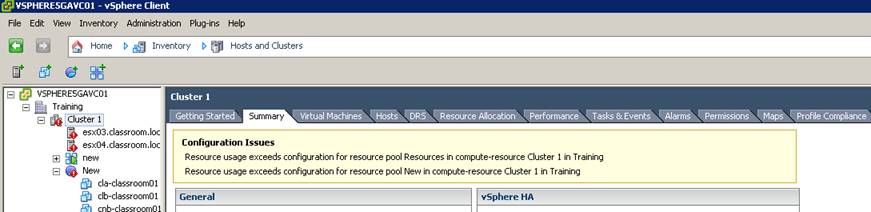
The Cluster with the RP is now invalid because it can see the VM has powered on. So the configuration about DRS RP is saved on the vCenter but it doesn’t stop you going directly to the host an powering on the VM. Now in vSphere 5.0 if you directly connect to a host and try and create a local resource pool it will throw up an error saying this isn’t allowed because it can see you are managed by vCenter, this is the case even if the Host isn’t a member of DRS cluster. So the creation and management of RP is done via vCenter, if vCenter goes down the rules cannot be applied so you could get admin powering on VMs by directly connecting to the hosts. So in summary all we have done is said “You can only create, modify resource pools via vCenter and not by directly connecting to the host”
Andy Cary who works as a Senior Technical Trainer at VMware responded immediately with: I created a RP on my vCenter and turned off expandable reservations for memory. Placed VM1 under said resource pool and failed to power up because the VM need to reserve memory for the overhead of running the VM (had no reservations set on the RP). So next I directly connected to the host and powered on the VM with no problem at all. However when you go back to the vCenter it displays:
The Cluster with the RP is now invalid because it can see the VM has powered on. So the configuration about DRS RP is saved on the vCenter but it doesn’t stop you going directly to the host an powering on the VM. Now in vSphere 5.0 if you directly connect to a host and try and create a local resource pool it will throw up an error saying this isn’t allowed because it can see you are managed by vCenter, this is the case even if the Host isn’t a member of DRS cluster. So the creation and management of RP is done via vCenter, if vCenter goes down the rules cannot be applied so you could get admin powering on VMs by directly connecting to the hosts. So in summary all we have done is said “You can only create, modify resource pools via vCenter and not by directly connecting to the host”
Sunday, January 22. 2012
Video - vCloud Director 1.5 - Quick Start
This quick start video provides a simplified, step-by-step set of instructions for creating a new virtual machine on the StratoGen vCloud platform. The StratoGen vCloud platform is built upon VMware vCloud Director 1.5. This video is a supplement to the vCloud director 1.5 user manual which provides comprehensive information about the platform.
Step 1 > Log in - Using a supported browser (Internet Explorer 7 or above, or Mozilla Firefox 3 or above) connect to the URL as provided by StratoGen. A typical URL is of the format https://mycloud.stratogen.com/cloud/org/your-organisation. Enter the username and password supplied to login to your account.
Step 2 > Select the ‘My Cloud’ tab - The initial homepage for your cloud is displayed. Now click on the ‘My Cloud’ tab. In the following steps I will take you through the steps required to create a new virtual machine in your cloud. All virtual machines must reside in a vApp (a vApp is a container that holds 1 or more virtual machines).
Step 3 > Click the ‘+’ symbol to create a new vApp from a catalog. You will now create a new vApp by clicking on the + icon
Step 4 > Select Catalog - You can upload your own virtual machine templates or ISO installation media into your organization’s catalog, but in this example we will be using one of the pre-built templates supplied by StratoGen. Click on the catalog drop down list and select ‘Public catalogs’.
Step 5 > Select vApp Template - Select the required operating system from the list of vApp Templates. In this example we will be creating a virtual machine with CentOS 5.5 installed, so we select the CentOS 5.5 vApp. This will create a vApp which contains a single CentOS 5.5 virtual machine.
Step 6 > Name your vApp - Enter a name for your new vApp, and a short description if required.
Step 7 > Configure virtual machine - Enter a computer name for your new virtual machine and then click on the ‘Network’ drop down list to select a network to attach it to. In this instance we will select a ‘Direct Internet Connection’. Always leave the IP assignment as ‘Static – IP Pool’. We are now ready to create our vApp and virtual machine. Click ‘Finish’.
Step 8 > vApp creation - That’s it. Your new vApp and virtual machine will now be created. Your virtual machine’s network settings will be configured automatically and a new root/administrator password will be automatically generated and assigned. We will also review our new virtual machine and note our new password.
Step 9 > vApp display - Once the creation of your vApp has completed, ‘Stopped’ will be displayed as the status. Select the vApp, and then click on the name. A visual depiction of the vApp is displayed. Now click the ‘Virtual Machines’ tab.
Step 10 > Virtual machine properties - This tab shows us the virtual machines in the vApp. In our case this is a single virtual machine called CentOS 5.5. Right click on your virtual machine and select properties. We can now view the properties of our virtual machine. To find the newly assigned root/administrator password for your VM select the ‘Guest OS Customization’ tab. Your new password is displayed after the ‘Auto generate password’ text.
Step 1 > Log in - Using a supported browser (Internet Explorer 7 or above, or Mozilla Firefox 3 or above) connect to the URL as provided by StratoGen. A typical URL is of the format https://mycloud.stratogen.com/cloud/org/your-organisation. Enter the username and password supplied to login to your account.
Step 2 > Select the ‘My Cloud’ tab - The initial homepage for your cloud is displayed. Now click on the ‘My Cloud’ tab. In the following steps I will take you through the steps required to create a new virtual machine in your cloud. All virtual machines must reside in a vApp (a vApp is a container that holds 1 or more virtual machines).
Step 3 > Click the ‘+’ symbol to create a new vApp from a catalog. You will now create a new vApp by clicking on the + icon
Step 4 > Select Catalog - You can upload your own virtual machine templates or ISO installation media into your organization’s catalog, but in this example we will be using one of the pre-built templates supplied by StratoGen. Click on the catalog drop down list and select ‘Public catalogs’.
Step 5 > Select vApp Template - Select the required operating system from the list of vApp Templates. In this example we will be creating a virtual machine with CentOS 5.5 installed, so we select the CentOS 5.5 vApp. This will create a vApp which contains a single CentOS 5.5 virtual machine.
Step 6 > Name your vApp - Enter a name for your new vApp, and a short description if required.
Step 7 > Configure virtual machine - Enter a computer name for your new virtual machine and then click on the ‘Network’ drop down list to select a network to attach it to. In this instance we will select a ‘Direct Internet Connection’. Always leave the IP assignment as ‘Static – IP Pool’. We are now ready to create our vApp and virtual machine. Click ‘Finish’.
Step 8 > vApp creation - That’s it. Your new vApp and virtual machine will now be created. Your virtual machine’s network settings will be configured automatically and a new root/administrator password will be automatically generated and assigned. We will also review our new virtual machine and note our new password.
Step 9 > vApp display - Once the creation of your vApp has completed, ‘Stopped’ will be displayed as the status. Select the vApp, and then click on the name. A visual depiction of the vApp is displayed. Now click the ‘Virtual Machines’ tab.
Step 10 > Virtual machine properties - This tab shows us the virtual machines in the vApp. In our case this is a single virtual machine called CentOS 5.5. Right click on your virtual machine and select properties. We can now view the properties of our virtual machine. To find the newly assigned root/administrator password for your VM select the ‘Guest OS Customization’ tab. Your new password is displayed after the ‘Auto generate password’ text.
Saturday, January 21. 2012
White Paper - Mobility and Disaster Recovery Solution for Virtualized Tier-1 Enterprise Applications
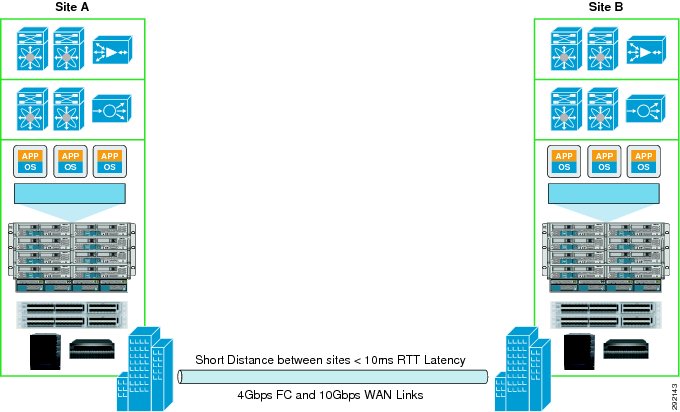
This white paper showcases a flexible solution from Cisco®, VMware®, and EMC® that allows customers to efficiently achieve live mobility and fully automated DR for virtualized enterprise applications across data centers with less than 10ms round-trip time (RTT) latency between them.
Live mobility for virtualized applications across data centers enables IT organizations to efficiently meet various operational needs, e.g., data capacity expansion, seamless migrations, disaster avoidance, etc.
Fully automated DR allows customers to protect their mission critical enterprise applications against site-level disasters and ensures business continuance. A key advantage of this solution over manual, runbook style DR process execution is "minimum downtime with lowest Recovery Time Objective (RTO)". This is extremely critical for next generation cloud solutions required to host hundreds to thousands of virtualized applications on the same shared infrastructure.
The Cisco, VMware, and EMC design presented in this white paper is very modular so that, based on customer requirements, there is flexibility to deploy both the live mobility and fully automated DR solution or deploy any one of these solutions.
http://www.cisco.com/en/US/docs/solutions/Enterprise/Data_Center/DCI/4.0/EMC/mobdisasterrecapps.html
Friday, January 20. 2012
Video - Install vSphere Syslog Collector and configure ESXi logging
Logging in vSphere 5.0 has been significantly enhanced. You now have fine-grained control over system logs, the location where logs are sent, and, for each log, default size and rotation policy. You can set up logging with the vSphere Client or with the esxcli system syslog command and the PowerCLI VMHostSysLogServer Commandlets. You can also set up logging behaviour for a host by using the Host Profiles interface in the vSphere Client and can then import that host profile into other hosts.
VMware vSphere ESXi 5.0 hosts run a syslog service (vmsyslogd) which provides a standard mechanism for logging messages from the VMkernel and other system components. By default in ESXi, these logs are placed on a local scratch volume or a ram disk. To preserve the logs further, ESXi can be configured to place these logs to an alternate storage location on disk, and to send the logs across the network to a syslog server.
You have to install the vSphere Syslog Collector to enable ESXi system logs to be directed to a server on the network, rather than to a local disk. It’s possible install the Syslog Collector on the same machine as the associated vCenter Server, or on a different machine that has network connection to the vCenter Server. The Syslog Collector service binds to an IPv4 address for communication with vCenter Server, and does not support IPv6. The vCenter Server can be on a host machine in an IPv4-only, IPv4/IPv6 mixed-mode, or IPv6-only network environment, but the machine that connects to the vCenter Server through the vSphere Client must have an IPv4 address for the Syslog Collector service to work.
In the ESXi Software panel there's an Advanced Setting called Syslog.global.LogHost, the value of this setting presents the remote host to which syslog messages are forwarded and port on which the remote host receives syslog messages. You can include the protocol and the port, for example, ssl://hostName1:514. UDP (default), TCP, and SSL are supported. The remote host must have syslog installed and correctly configured to receive the forwarded syslog messages. Checkout the video how the syslog service is installed on the vCenter host.
You can also set up ESXi Syslog from the Host Profiles Interface. Hosts provisioned with Auto Deploy usually do not have sufficient local storage to save system logs. You can specify a remote syslog server for those hosts by setting up a reference host, saving the host profile, and applying that host profile to other hosts as needed. Best practice is to set up the syslog server on the reference host with the vSphere Client or the esxcli system syslog command and save the host profile. In some situations, setting up syslog from the Host Profiles interface is an alternative.


